Find Single Door Pulsed Vacuum Autoclave for Garments, Instruments, Liquids
Source 30 single door pulsed vacuum autoclave units from verified Chinese manufacturers. Buyers can compare models like WG, MDH, and MDD series with capacities from 250L to 4000L, featuring stainless steel construction and CE or ISO certifications for sterilizing garments, surgical instruments, and liquids.
Key considerations
Products List




Comprehensive Sourcing Guide
Strategic Sourcing Guide for Single Door Pulsed Vacuum Autoclaves
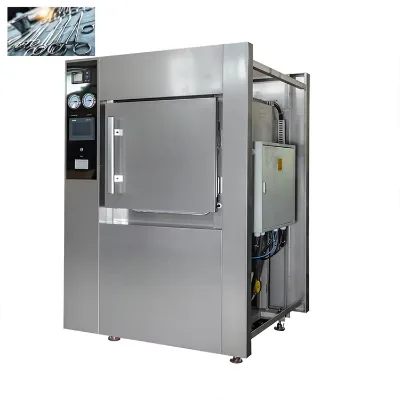
Procuring industrial sterilization equipment requires a rigorous approach that balances technical performance with regulatory compliance and total cost of ownership. The single door pulsed vacuum autoclave represents a specialized category of pressure steam sterilization equipment designed for high-efficiency sterilization cycles. Unlike gravity displacement units, these systems utilize a vacuum phase to remove air from the chamber, ensuring superior steam penetration into porous loads and complex instrument sets. For procurement professionals, understanding the specific attributes of these machines is critical to ensuring operational safety and process reliability. The following guide outlines the essential factors for sourcing this equipment, drawing on observed market data and technical specifications.
Technical Specifications and Operational Parameters
The core functionality of a single door pulsed vacuum autoclave relies on precise control of pressure, temperature, and vacuum cycles. Based on observed market data, these units are frequently categorized under the WG Series, MDH Series, MDD Series, and BSL-P3 configurations. A critical technical distinction is the voltage requirement; observed specifications indicate a dual voltage landscape where some units operate on 380V while others are rated for 220V. Buyers must verify the electrical infrastructure of their facility before finalizing a purchase to avoid costly retrofitting.
The physical dimensions and capacity of these sterilizers vary significantly to accommodate different production scales. Observed loading capacities range from 250 liters to 4,000 liters, with specific model series offering discrete steps such as 360L, 450L, 550L, 680L, 800L, 1,000L, 1,200L, 1,500L, and 2,600L. The design pressure typically sits at 0.25 MPa, with a maximum design temperature of 139 degrees centigrade. These parameters define the safety envelope of the equipment. The weight of the units is substantial, ranging from 900kg to 2,500kg depending on the chamber volume, necessitating reinforced flooring and careful logistics planning during installation.
The sterilization mechanism is explicitly defined as "Pressure Steam" utilizing a "Pulse Vacuum" theory. This process is particularly effective for applications involving garments, surgical instruments, tools, and liquids. The system often includes a built-in steam generator or can be connected to an external steam source, offering flexibility in utility integration. Advanced models feature an LCD display for cycle monitoring and are equipped with ultra-high temperature alarms to prevent process deviations. The finished dosage form for liquid sterilization is a key capability, requiring the equipment to maintain specific pressure profiles to ensure sterility without damaging the product.
Compliance, Certification, and Regulatory Standards
In the medical and pharmaceutical sectors, regulatory compliance is non-negotiable. The equipment observed in the market carries several certifications, including ISO, CE, GMP, and FDA. Specific product listings reference certifications such as ISOCE and ISOEEC, alongside standard CE and ISO markings. These designations indicate that the manufacturing processes and the final product meet international quality and safety standards. However, buyers must exercise caution; while these certifications are listed as product attributes, they should be verified against the specific model number and the manufacturer's current status.
The standard operating protocols for these units often align with CE and ISO standards. The "Bio-Safety Steam Sterilizer" models, such as those in the BSL-P3 series, are designed for higher containment requirements, suggesting compliance with biosafety level protocols. For general surgical and industrial applications, the CE mark is a primary indicator of conformity with European health, safety, and environmental protection standards. The presence of GMP (Good Manufacturing Practice) certification is particularly vital for pharmaceutical applications, ensuring that the sterilization process is validated and reproducible. Buyers should request current certification documents and verify the scope of the certification to ensure it covers the specific model being purchased.
Cost Drivers and Pricing Structure
The pricing for single door pulsed vacuum autoclaves exhibits a wide range, observed between 450 USD and 90,000 USD. This variance is driven by several key factors, primarily chamber capacity, automation level, and material composition. Smaller units with capacities around 250L to 360L generally occupy the lower end of the price spectrum, while large-scale industrial units with capacities exceeding 2,000L and advanced computerized controls command premium prices.
Material quality is a significant cost driver. The majority of these units are constructed from stainless steel, a material chosen for its corrosion resistance and durability in high-temperature, high-pressure environments. The thickness of the steel and the grade (e.g., 304 vs. 316L) can influence both the cost and the longevity of the equipment. Additionally, the complexity of the control system affects pricing. While some units are non-computerized, others feature LCD displays and advanced recording capabilities for sterilization information. The inclusion of a built-in steam generator versus reliance on an external source also impacts the initial capital expenditure.
The Minimum Order Quantity (MOQ) for these industrial machines is typically 1 unit, allowing for single-unit procurement. However, the total cost of ownership extends beyond the purchase price. Buyers must account for shipping costs, which are substantial given the weight of the units (900-2500kg) and the requirement for fumigated wooden case packaging. Installation, commissioning, and the cost of integrating steam and electrical utilities are additional factors that should be included in the budget.
Typical Applications and Process Suitability
The versatility of the single door pulsed vacuum autoclave makes it suitable for a diverse range of industries. The primary application areas include the sterilization of garments, surgical instruments, and various tools. The pulsed vacuum cycle is particularly advantageous for porous materials, as it removes air pockets that could otherwise shield microorganisms from the sterilizing steam. This makes the equipment ideal for hospitals, dental clinics, and pharmaceutical manufacturing facilities.
For liquid sterilization, the process is tailored to ensure the "Finished Dosage Form" remains intact while achieving sterility. The ability to handle liquids requires precise control over the cooling phase to prevent container breakage or liquid boil-over. The "Name" attribute of "Pulse Vacuum Steam Sterilizer" and "Bio-Safety Steam Sterilizer" highlights its dual utility in general sterilization and biosafety applications. The door configuration is another critical factor; while the core keyword specifies "single door," some models offer pass-through double doors, which are essential for isolating sterile and non-sterile zones in high-containment environments. Buyers should assess their workflow requirements to determine if a single-door unit suffices or if a pass-through design is necessary for their specific facility layout.
Supplier Evaluation and Quality Assurance
When evaluating potential suppliers, buyers should look for evidence of a "New" condition for the equipment and a standard warranty period of 1 Year. The warranty is a critical indicator of the manufacturer's confidence in their product's durability. The "Condition" attribute being listed as "New" suggests that the equipment is not refurbished, which is generally preferred for critical sterilization processes to ensure full lifecycle performance.
Quality control should be a central part of the supplier selection process. Buyers should verify the "Precision" of the manufacturing and the reliability of the "Sterilization Information Recording and Printing" features. These features are essential for maintaining audit trails and ensuring that every sterilization cycle meets the required parameters. The "Computerized" attribute varies, with some units being non-computerized, which may be suitable for simpler applications but lacks the data logging capabilities required for regulated industries.
The "Terms of Payment" typically include T/T (Telegraphic Transfer) and L/C (Letter of Credit), which are standard for international trade. Buyers should ensure that the payment terms align with their financial policies and risk management strategies. Additionally, the "prod_packing" method, often described as a "Fumigated Wooden Case" or "1PC/CTN," is crucial for protecting the equipment during transit. The fumigation status is a regulatory requirement for international shipping to prevent the spread of pests, and buyers should confirm that the packaging meets the destination country's import regulations.
Long-Term Procurement and Maintenance Considerations
Long-term success with autoclave procurement depends on the availability of spare parts, technical support, and the ease of maintenance. The "Warranty" of 1 Year provides an initial safety net, but buyers should inquire about the availability of service contracts and the lead time for replacement parts. The "Weight" and "Design Pressure" of the units imply that maintenance requires specialized personnel and potentially specific tools.
The "Standard" of the equipment, often listed as 250L, 360L, 600L, etc., refers to the capacity models available. Buyers should ensure that the supplier can support the specific model they purchase, as different models may have unique maintenance requirements. The "Theory" of operation, based on "Pressure Steam," requires regular validation of the vacuum pumps and heating elements. The "Ultra High Temperature Alarm" is a safety feature that must be tested regularly to ensure it functions correctly in the event of a system failure.
Furthermore, the "Location" of the supplier, often noted as "China," can influence lead times and shipping logistics. While the origin is a factual observation, buyers should consider the time required for international shipping and customs clearance. The "Capacity" of the supplier's production line and their ability to meet delivery schedules should be verified. Finally, the "Customized" and "Customization" attributes indicate that some suppliers offer tailored solutions. Buyers should clearly define their customization needs, such as specific voltage requirements or door configurations, to ensure the final product meets their operational constraints.
Summary of Key Specifications
To facilitate a quick comparison of the observed market data, the following table summarizes the critical specifications for single door pulsed vacuum autoclaves.
| Attribute | Observed Range / Options | Notes for Verification |
|---|---|---|
| Voltage | 220V, 380V | Confirm facility electrical supply. |
| Capacity | 250L - 4,000L | Select based on load volume requirements. |
| Design Pressure | 0.25 MPa | Standard safety limit; verify for specific models. |
| Design Temperature | 139°C | Maximum operating temperature. |
| Certifications | ISO, CE, GMP, FDA, ISOCE, ISOEEC | Request current certificates for specific models. |
| Material | Stainless Steel | Verify grade for corrosion resistance. |
| Door Type | Single / Pass-Through Double | Single door is standard; double for isolation. |
| Warranty | 1 Year | Standard term; negotiate for extended coverage. |
| Condition | New | Ensure equipment is not refurbished. |
| Packing | Fumigated Wooden Case / 1PC/CTN | Check for import compliance. |
| Payment Terms | T/T, L/C | Standard international trade terms. |
In conclusion, sourcing a single door pulsed vacuum autoclave requires a detailed understanding of the technical specifications, regulatory landscape, and supplier capabilities. By carefully evaluating the voltage, capacity, and certification status, buyers can select a unit that meets their specific sterilization needs while ensuring long-term operational reliability. The wide range of available models and customization options allows for tailored solutions, but the complexity of the equipment demands a thorough due diligence process to mitigate risks and ensure compliance with all relevant standards.
FAQs
What certifications do single door pulsed vacuum autoclaves typically hold?
These units commonly hold ISO, CE, GMP, and FDA certifications. Specific models may also display ISOCE or ISOEEC markings, indicating compliance with international quality and safety standards for medical and pharmaceutical applications.
How much does a single door pulsed vacuum autoclave cost?
The price range observed is between 450 USD and 90,000 USD. Costs vary significantly based on chamber capacity, automation features like LCD displays, and whether the unit includes a built-in steam generator or requires an external source.
Which voltage options are available for these sterilization machines?
Available voltage specifications include 380V and 220V. Buyers must verify their facility's electrical infrastructure before purchasing, as units are manufactured with specific voltage requirements that cannot be easily changed after installation.
Can single door pulsed vacuum autoclaves sterilize liquids?
Yes, these machines are designed to sterilize liquids as a finished dosage form. The pulse vacuum process ensures steam penetration while maintaining pressure profiles that prevent container damage or liquid boil-over during the cycle.
What is the standard warranty period for new autoclave units?
The standard warranty period is 1 Year for new equipment. This warranty covers manufacturing defects and provides an initial safety net, though buyers should also inquire about spare parts availability and service contracts for long-term support.
How large is the loading capacity for these sterilizers?
Loading capacities range from 250 liters to 4,000 liters depending on the model series. Specific discrete steps include 360L, 450L, 550L, 680L, 800L, 1,000L, 1,200L, 1,500L, and 2,600L to suit various production scales.
What packaging is used for shipping these heavy industrial units?
Units are typically packed in fumigated wooden cases or 1PC/CTN cartons. The fumigation status is a regulatory requirement for international shipping to prevent pest spread, and the packaging protects the 900-2500kg equipment during transit.